Selling A Hillside Home In Castro Valley: What The Inspection Report Catches That Flatland Homes Don't
August 13, 2026
August 13, 2026
The inspector doesn't start at the kitchen. On a hillside lot in Five Canyons or Parsons Estates, the first stop is usually the side yard, where he runs a level along the grade break behind the garage and checks how the ground falls away toward the property line. That five minutes tells him more about what he's going to write up than anything inside the house. A flatland home a mile away in Columbia or Proctor skips that step entirely. There's no grade break to check.
This difference used to not matter much. When Castro Valley homes were going pending in two weeks with backup offers stacked behind them, a hairline crack or a drainage note got absorbed into the deal and nobody blinked. That isn't the market anymore. The friction that hillside homes carry by nature, the soil movement, the retaining walls, the fault zone paperwork, is now the kind of thing that decides whether a listing sells in three weeks or sits into a second month.
In November 2025, Castro Valley homes were already taking longer to sell than the year before, with a median of 18 days on market compared to 13 days the prior November. By June 2026, the shift was harder to miss. That month, the city carried 84 active listings against just 40 closed sales, with those active listings sitting for an average of 66 days and closed sales taking 47 days on average, up from 44 the month before. The median sale price slipped 8.1 percent from May to June, landing at $1,167,500, and sales volume was down almost 26 percent from June 2025. Homes were still closing above asking, at a 104.5 percent sale-to-list ratio, but the pace behind that number had clearly cooled.
By August 2026, the citywide median list price sat at $1.15 million, or $644 per square foot, with typical listings going pending in 27 days. That's not a collapsed market. It's a market with breathing room in it, the kind where a buyer who finds something off in the inspection report has both time and alternatives instead of three other buyers breathing down their neck.
That breathing room is exactly what changes the math on hillside listings.
When inventory is tight and offers are stacked, buyers waive contingencies or absorb repair costs just to win the house. When inventory loosens, as it has through the first half of 2026, buyers start reading the inspection report line by line and asking for credits, extensions, or outright price reductions on anything that reads as a long-term cost. A flatland home rarely gives them much to work with beyond the usual roof, HVAC, and electrical items. A hillside home gives them a longer list, and in a market with 84 active listings competing for 40 buyers a month, a longer list is leverage.
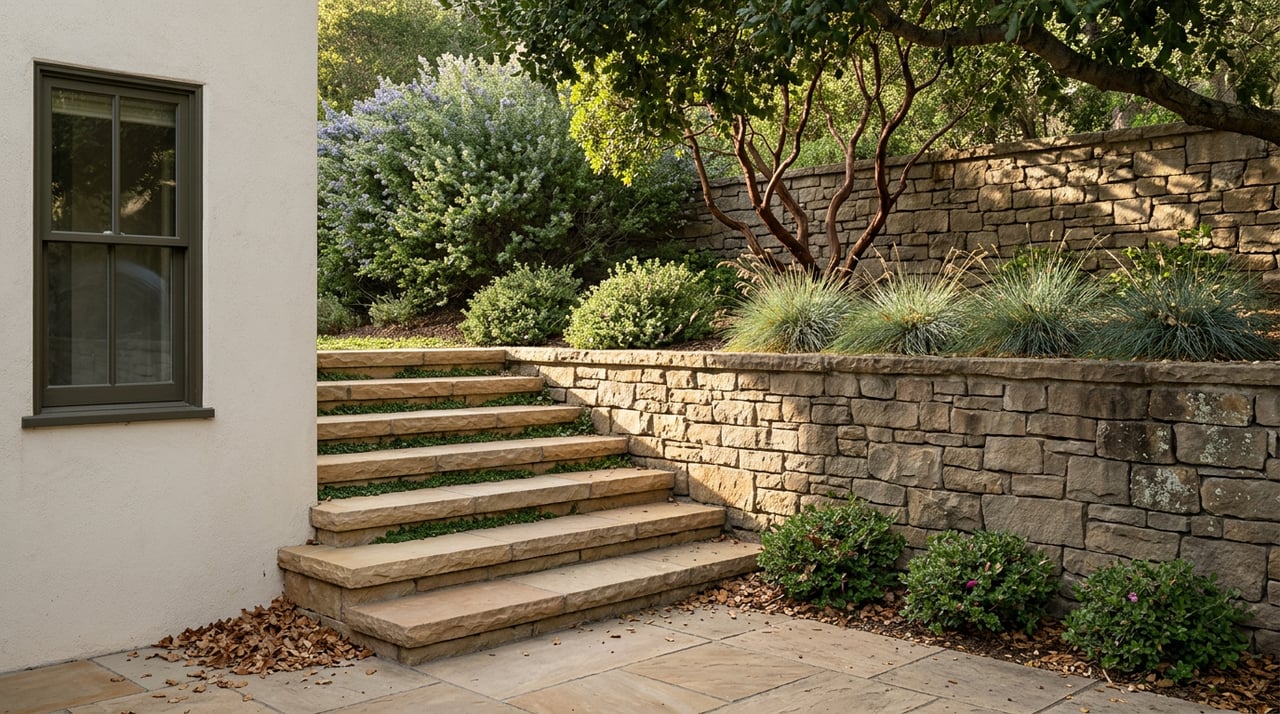
Castro Valley sits where the surrounding hills give way to an alluvial plain, and that transition shows up in the ground itself. Homes on expansive clay soil expand and contract with the seasons, which is why older houses in the hills tend to show cracked stucco, doors that stick in winter and swing free in summer, and floors that read slightly out of level even when nothing structural is wrong. On a flat lot, that movement is uniform and easy to explain. On a sloped lot, uneven settling and hillside erosion can compound it, which is why drainage, French drains, and the condition of any retaining wall on the property get more attention in a hillside inspection than they ever would on a flatland one.
This isn't unique to any one Castro Valley subdivision. It shows up in Five Canyons, the 1990s hillside development where many homes run 2,500 square feet or more and back up to graded slopes with no rear neighbors. It shows up in Parsons Estates, built mostly between 1950 and 1991 on lots ranging from a quarter acre to more than an acre near Lake Chabot. It shows up in Palomares Hills, Fox Ridge Estates, and the custom lots of Upper Castro Valley. Any seller in these areas should expect a buyer's inspector to spend real time on grading and drainage before they ever walk inside.
The Hayward Fault runs along the western edge of Castro Valley, and it doesn't sit quietly. Unlike a fault that ruptures only in a major quake, the Hayward Fault creeps continuously, and that slow movement is documented where it crosses developed ground. As the California Geological Survey puts it, "examples of creep are well known along the Hayward Fault where it crosses highly developed areas."
That matters at the negotiating table because California's Alquist-Priolo Act requires sellers whose property intersects a mapped earthquake fault zone to disclose that fact to buyers before the sale is complete, and that disclosure has to appear on the Natural Hazard Disclosure Statement required under Civil Code Section 1103. A buyer who is scanning a stack of comparable listings and sees a fault zone box checked on one and not the other doesn't need it explained to them. They already know what to ask, and in a market where they have other options, an unresolved question about that box costs a seller time. Any agent working a hillside file should be pulling the parcel's status on the state's fault zone maps before the listing goes live, not after an offer comes in.
Alameda County's own natural hazards planning documents describe Castro Valley's physical setting as one of steep topography, creeks, and canyons, a description that fits the hillside neighborhoods far more than the valley floor. Properties in designated high or very high fire hazard severity zones carry a separate disclosure requirement around defensible space at the time of sale. For a seller in Upper Castro Valley or the hills above Redwood Road, that means brush clearance, roof and gutter debris, and vegetation setback aren't landscaping preferences. They're part of what a buyer's agent will ask about before writing an offer, and in a slower market, an unaddressed defensible space issue is one more reason a buyer chooses to keep looking instead of making a decision this weekend.
None of this means a hillside home is harder to sell. It means the sequence matters more than it used to.
This is the kind of prep that turns a hillside listing from a 60-day sit into something closer to that citywide 27-day median.
Does every Castro Valley home sit in the Hayward Fault's Alquist-Priolo zone? No. The zone follows the fault's mapped trace along the western part of the city. Flatland neighborhoods further from that trace may not require the same disclosure, which is exactly why the box matters when it does apply.
Do flatland homes face any of the same disclosure requirements? Some, depending on location, but the clustering of fault zone, drainage, and defensible space issues specific to hillside terrain is heavier in the hills than on the valley floor.
Does a fault zone or defensible space disclosure kill a sale? Not on its own. Homes in these zones sell regularly. What changes in a slower market is how much room a buyer has to ask questions about it, which is why getting ahead of the paperwork matters more now than it did two years ago.
If you're weighing a hillside listing this fall, the numbers above are the starting point, not the whole picture. Bert Aranda has spent decades working Castro Valley's hills and flatland alike, coordinating the inspections, reports, and prep work that keep a listing moving instead of sitting. Get a free home valuation and find out where your property actually stands before you put a sign in the yard.

Get assistance in determining current property value, crafting a competitive offer, writing and negotiating a contract, and much more. Contact me today.