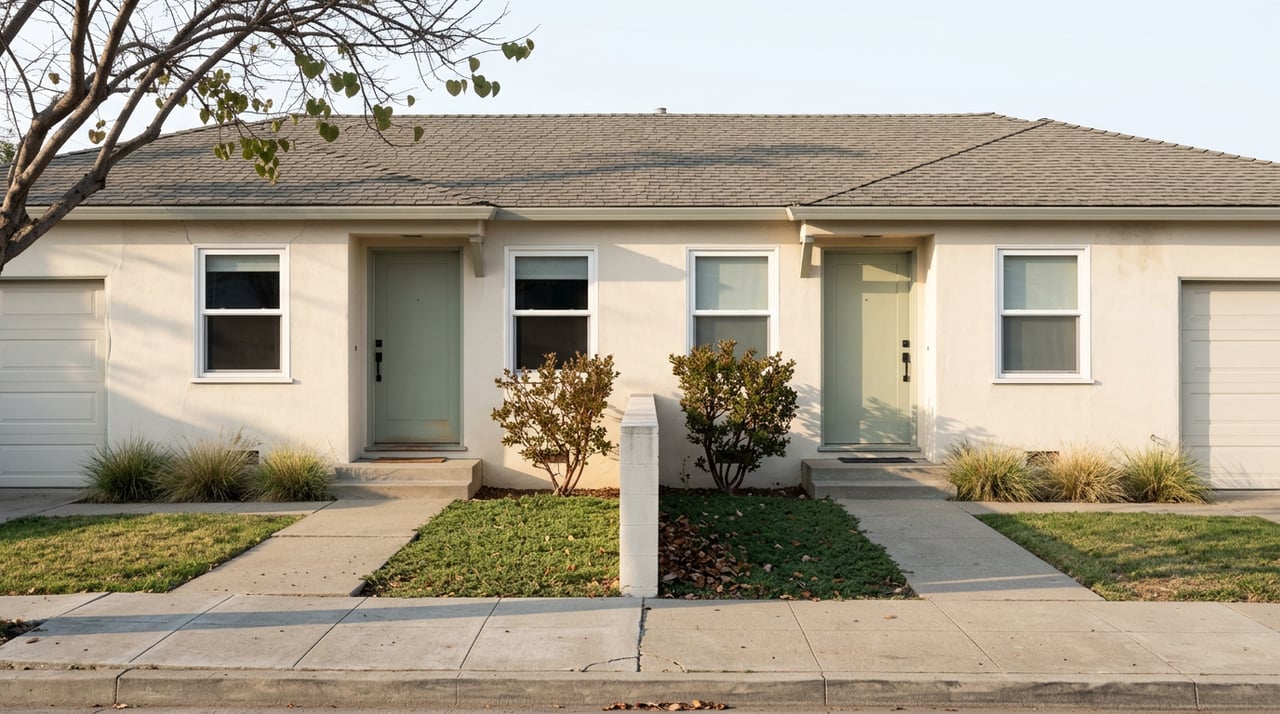
San Leandro's New Rent Ordinance Stops At A Line Most Investors Can't See. It Runs Through San Lorenzo.
August 27, 2026
August 27, 2026
On February 2, 2026, the San Leandro City Council passed Ordinance 2026-001, a rent stabilization and just cause eviction program that rewrites what it costs to own a small multi-family building inside the city. Buried in that ordinance is a detail that should worry any owner who raised rent under state law in the second half of 2025: a retroactive baseline date that can force a rollback, plus restitution, once enforcement starts in January 2027.
Here's the part that changes how you should be underwriting deals right now. That ordinance stops cold at San Leandro's incorporated city limits. San Lorenzo, sitting immediately to the south and sharing zip codes, school catchments, and in some cases the exact street grid, is unincorporated Alameda County. It isn't covered. Not partially, not with an exemption clause you have to hunt for. It simply falls outside the ordinance entirely, governed instead by the much looser statewide rules that have applied since 2020.
If you're comparing a duplex in San Leandro against a similar one in San Lorenzo, that boundary just became one of the more consequential numbers in your underwriting, and it won't show up on a portal listing.
The ordinance creates a Residential Rent Stabilization and Just Cause Eviction program for covered multi-family properties inside San Leandro city limits, effective January 1, 2027. Four provisions matter most for an owner or buyer:
Most rent ordinances I've watched roll out over the years regulate forward from the date they pass. This one reaches backward. If you own a covered San Leandro building and raised rent under AB 1482 anytime after July 1, 2025, the city's enforcement review starting in 2027 could find that increase exceeded the new local cap and require you to give some of it back, plus restitution on top.
That's not a hypothetical for anyone who priced a 2025 or 2026 lease renewal using the state formula rather than anticipating a local cap that didn't exist yet at the time. There was no way to know in September 2025 that San Leandro's council would set the bar this much lower five months later and then reach back a full seven months to apply it.
San Lorenzo is unincorporated Alameda County, along with Ashland, Cherryland, and Castro Valley. San Leandro's ordinance applies only inside the city's incorporated limits, so properties in these unincorporated pockets fall outside it entirely, even when the mailing address reads "San Leandro."
Instead, San Lorenzo rentals are governed by the statewide California Tenant Protection Act, commonly known as AB 1482. That law caps annual increases at 5% plus the regional CPI, or 10%, whichever is lower, and requires just cause for eviction after twelve months of tenancy. There's no local registry to file with, no rent board, and critically, no retroactive baseline reaching back into rent you already collected.
Here's the side-by-side that matters when you're comparing the two markets:
| San Leandro (inside city limits) | San Lorenzo (unincorporated) | |
|---|---|---|
| Governing law | Ordinance 2026-001 | AB 1482 (statewide) |
| Annual increase cap | Lower of 3% or 65% of CPI | Lower of 5% + CPI or 10% |
| Retroactive baseline | Yes, July 1, 2025 | No |
| Local registry required | Yes, annual, by July 31 | No |
| No-fault relocation floor | 3x rent or 3x HUD FMR, whichever higher | One month's rent |
| Enforcement begins | January 1, 2027 | Already in effect since 2020 |
Two buildings that look nearly identical on a rent roll can carry very different regulatory ceilings on how fast that income can grow, and very different exposure to a rollback that hasn't happened yet but is already written into the code.
Address alone won't settle this. Plenty of properties carry a San Leandro mailing address purely as a postal convention while sitting on unincorporated county land, and the reverse can happen too near boundary streets. If you're underwriting a deal near this line, verify the parcel directly rather than trusting what the listing sheet says.
A few steps that settle it quickly:
I'd treat this as a standard underwriting step for any multi-family deal near the San Leandro and San Lorenzo line for at least the next few years, not a one-time curiosity.
For a buyer weighing a small multi-family building in each location, the calculus has shifted. A San Leandro property now carries a lower ceiling on rent growth, a compliance calendar with a hard registry deadline, and a rollback risk that hangs over any increase collected since mid-2025. A San Lorenzo property carries none of that, only the more familiar statewide framework that's been in place for six years.
That doesn't make San Lorenzo automatically the better buy. Interest rates, physical condition, unit mix, and the actual rent roll still do most of the work in any underwriting. But if you're running two comparable deals side by side and one sits inside San Leandro's new ordinance while the other doesn't, that difference belongs in your cap rate assumptions and your hold-period planning, not as a footnote you notice after you've already signed a purchase agreement.
For sellers on the San Leandro side, this cuts the other way. If your building has increases since July 2025 that might exceed the new cap, get ahead of the registry deadline and have your numbers reviewed before a buyer's attorney finds the exposure during due diligence. None of this is tax or legal advice, and a property this close to a jurisdictional line deserves a conversation with a real estate attorney or CPA who can confirm your parcel's status and your specific exposure.
Does this affect single-family home rentals too? San Leandro's new ordinance targets covered multi-family properties. Single-family rentals may still fall under AB 1482 protections depending on ownership structure, but they're generally treated differently than 2-plus unit buildings under both the local ordinance and the statewide law.
My property has a San Leandro mailing address. How do I know for sure which side of the line I'm on? Don't rely on the address. Confirm through the county's unincorporated area lookup or your title company, since postal addressing and legal jurisdiction don't always match near a boundary.
Could the ordinance change again before it takes effect in 2027? It's possible. Local ordinances of this kind are sometimes amended after passage, so anyone with a covered property should keep watching for updates between now and the January 2027 enforcement date rather than assuming the current terms are final.
If you're weighing a multi-family purchase, a 1031 exchange, or a sale anywhere along the San Leandro and San Lorenzo line, I'd rather walk the numbers with you before you're deep into escrow than after. Bert Aranda has spent decades working this exact stretch of the East Bay, and getting the jurisdiction right on a deal like this is the kind of groundwork that protects your return long after closing.
Get assistance in determining current property value, crafting a competitive offer, writing and negotiating a contract, and much more. Contact me today.