Hayward Hills vs. the Flatlands: What the Price Gap Is Actually Pricing In
October 1, 2026
October 1, 2026
Inside Hayward City Hall, built in 1998, there's a small exhibit most visitors walk past without stopping: a section of curb and sidewalk that has been slowly, visibly offset over the years by the ground beneath it creeping apart. The Hayward Fault doesn't wait for a major earthquake to move. It creeps, a little every year, and City Hall built its own evidence of that into the building. The same fault crosses Mission Boulevard a few blocks away, and it runs directly under the BART tracks at both the Hayward and South Hayward stations.
That geography matters more to a home search than most listing descriptions let on. Hayward's real estate conversation usually gets framed as hills versus flatlands: pay a premium for a view and a quieter street, or buy into the flats for less and live closer to BART. The framing implies the flatlands and the hills are two different risk tiers, with price sorting buyers into one or the other. The fault doesn't sort itself that way. It runs along the base of the hills and straight through downtown, which means the seismic story and the price story are not actually the same story, even though they get told together.
Pull four different sources on Hayward's citywide median right now and you'll get four different numbers, and the disagreement is itself informative. Redfin's three-month window ending May 2026 puts the median sale price at $884,000, up 2.6 percent year over year, with homes averaging 17 days on market. Zillow's home value index, updated through roughly July 2026, shows an average home value of $846,286, down 9.6 percent over the past year. Houzeo's December 2025 read put the median at $715,000, essentially flat year over year, with a striking 98.12 percent sale-to-list ratio and just 0.4 months of supply. Movoto's September 2026 snapshot shows a median list price of $799,000, down 3 percent both month over month and year over year.
None of these sources is wrong. They're measuring different things (list price versus sold price, a single month versus a rolling quarter, home-value-index modeling versus raw MLS medians) at different points in a year that has moved. A single "Hayward median" is a blunt instrument for a city with this much internal variation, and that blunt instrument gets a lot sharper once you split it by submarket.
Downtown Hayward, over the three months ending June 2026, had a median sale price of $680,000, down 2.9 percent year over year, with homes taking 38 days to sell compared to 49 days a year earlier. Only 5 homes sold there in June 2026, down from 7 the prior year, a small enough sample that any one unusual sale can swing the average significantly.
Hayward Highland, a hillside-adjacent submarket, is where the numbers get genuinely strange. In March 2026, the average house price there fell 29.8 percent year over year, while the median sale price rose 18.9 percent to $1.2 million over the same stretch, and price per square foot climbed 33.3 percent to $629. Average and median moving in opposite directions in the same market, in the same month, is not a data error. It's what happens when only 15 homes sell in a month (up from 9 the year before) and a couple of unusually priced properties in a thin sample pull the average one way while the bulk of ordinary sales pull the median the other way. Days on market there dropped from 60 to 21, which tells you demand tightened considerably, but the price signal from that same market needs the median, not the average, to mean anything.
Further into the hills, the 94542 zip code, commonly referred to as Hayward Hills, sold at a median of roughly $1.63 million in the second quarter of 2026, well above the Highland figure and more than double the Downtown Hayward median. Active listings there run thin, around 35 at any given time, with a median of about 33 days on market.
| Submarket | Recent median sale price | Window | Days on market |
|---|---|---|---|
| Downtown Hayward | $680,000 | 3 months ending June 2026 | 38 (vs. 49 a year prior) |
| Hayward citywide | $884,000 | 3 months ending May 2026 | 17 (vs. 15 a year prior) |
| Hayward Highland | $1,200,000 | March 2026 | 21 (vs. 60 a year prior) |
| Hayward Hills (94542) | ~$1,630,000 | Q2 2026 | ~33 |
The Alquist-Priolo Earthquake Fault Zoning Act requires sellers to disclose when a property sits within a mapped fault zone, and those zones aren't neighborhood-wide designations. They're narrow, typically about a quarter mile across, drawn around the actual mapped trace of the fault. California's Geological Survey maintains twelve official Alquist-Priolo zone maps covering the Hayward Fault specifically, because the fault's path through Alameda County is well studied and well documented.
The trace itself runs from Fremont through Hayward, San Leandro, Oakland, and Berkeley, following the base of the East Bay hills for most of that distance. In Hayward, it crosses Mission Boulevard and passes directly beneath the BART tracks at both the Hayward and South Hayward stations. Those two stations sit in what most buyers would call the flatlands, not the hills. That's the detail the hills-versus-flatlands framing misses. A downtown-adjacent home near Mission Boulevard can be closer to the mapped fault trace than a home several blocks up into the hills, depending entirely on which side of the trace each parcel falls on and how far it sits from that quarter-mile band.
Fault-trace proximity and other seismic hazards, like liquefaction, are also separate and non-correlated risks. A home can sit close to the fault on solid bedrock and face intense shaking with minimal liquefaction, while a home miles away on filled or soft ground faces a different hazard entirely. Neither risk shows up automatically in a listing price. Both require checking the specific parcel against the California Geological Survey's EQ Zapp map, which is public and searchable by address, rather than assuming that a hills price tag has already priced in a seismic advantage over a flatland one.
The city has lived with this fault since before it was fully understood. The October 1868 earthquake, estimated at magnitude 6.8 to 7.0, destroyed nearly every building in Hayward at the time and collapsed the courthouse. It remains one of the most consequential quakes in California's recorded history. That history is part of why the disclosure requirement exists today, and part of why checking a specific address matters more than trusting a submarket's reputation.
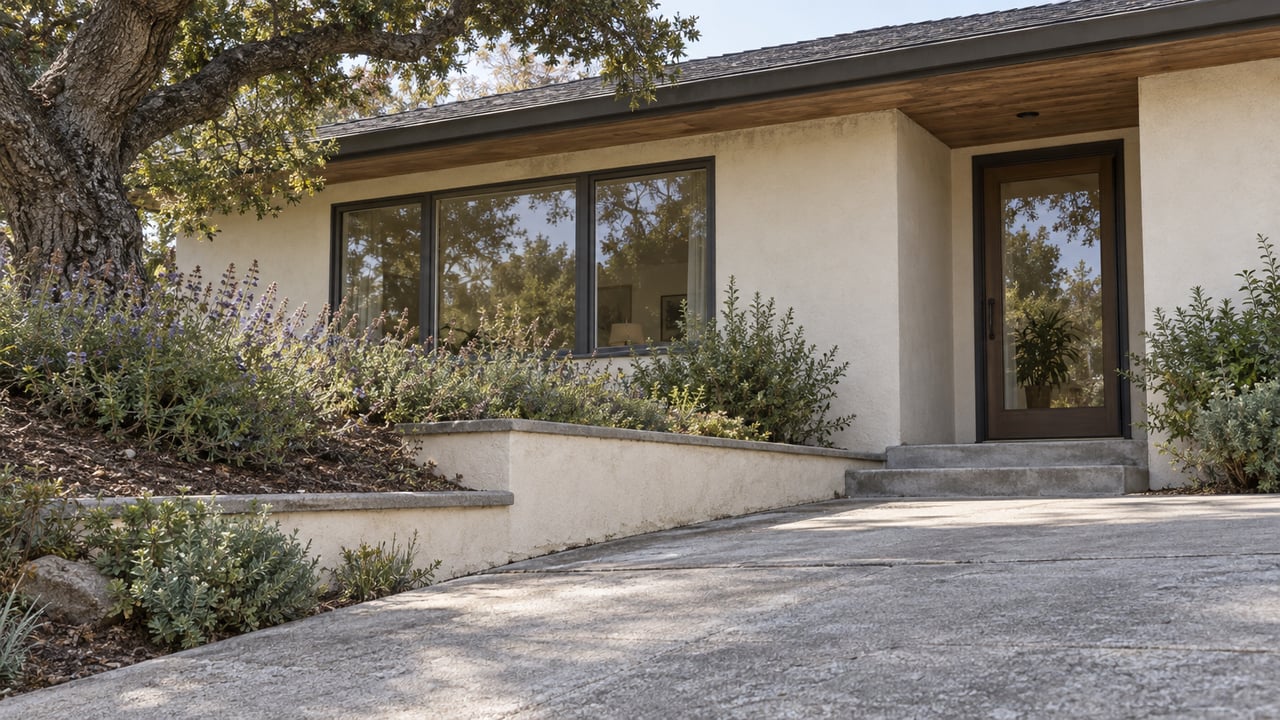
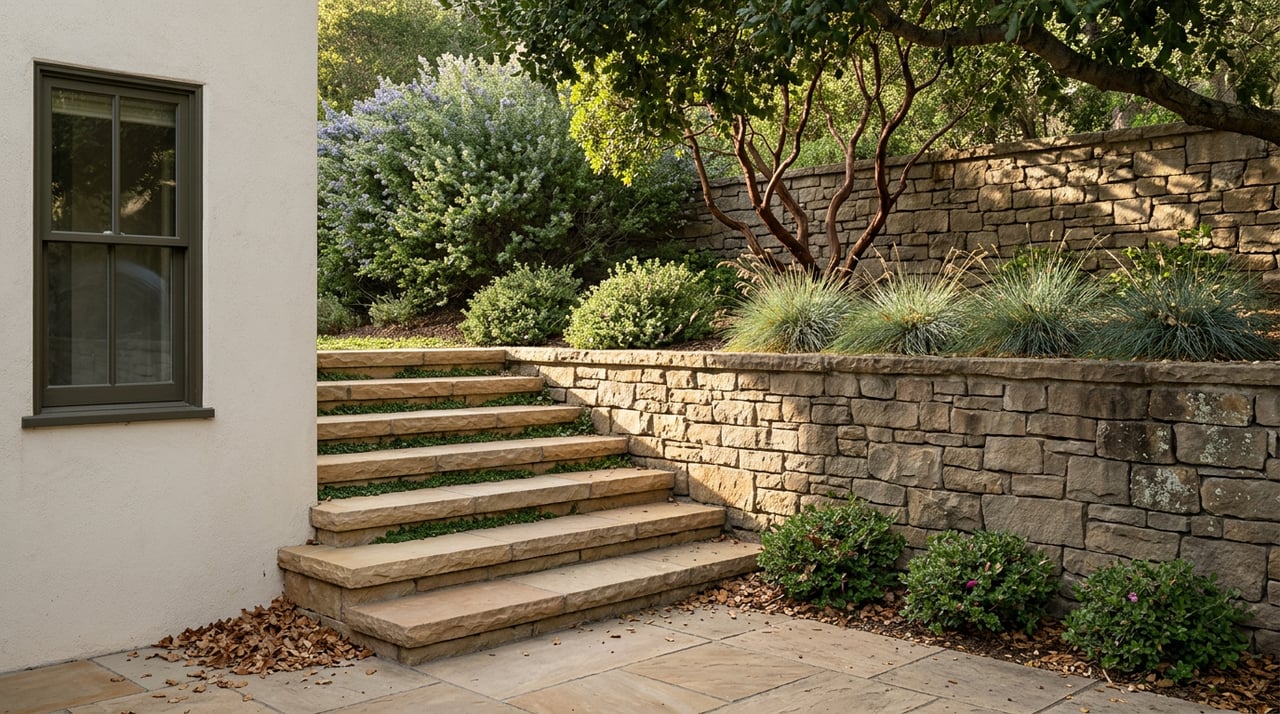
If the price gap between Hayward Hills and the flatlands isn't reliably buying a seismic advantage, it's worth being specific about what it is buying. Hillside lots in 94542 run larger, and the housing stock leans toward custom or semi-custom architecture: terraced yards, multi-level floor plans built for the slope, and more individual variation from one property to the next than a standard flatland subdivision offers. Residents in the hills also have direct access to the Garin and Dry Creek Pioneer Regional Preserves, part of one of the more extensive regional park systems in California.
The tradeoff is commute time. Hayward is known for genuinely convenient transportation, sitting at the intersection of Interstate 580, Interstate 880, and Highway 92, with BART service at both the Hayward and South Hayward stations. That convenience is a flatland advantage more than a hills one. Climbing into 94542 adds real drive time to reach either station or either freeway, even though the straight-line distance looks short on a map.
There's a financing threshold worth knowing too. The 2026 high-balance conforming loan limit for Alameda County sits at $1,249,125. A purchase at the Downtown Hayward or citywide median falls comfortably under that line. A purchase at the Hayward Highland median, and nearly every purchase at the Hayward Hills median, crosses it, which means jumbo financing, different underwriting, and typically a larger down payment expectation. That's a transaction-level difference between the submarkets that has nothing to do with the fault and everything to do with the price tier itself.
For anyone weighing Hayward Hills as an investment rather than a primary residence, the rent side of the ledger is worth running before the price side. As of May 2026, the estimated median asking rent in 94542 was around $2,842 a month, a real premium over much of Hayward's flatland rental market. Set against a $1.63 million median sold price, that works out to roughly 2 percent of purchase price in annual rent, a thin ratio that reflects a bet on appreciation and long-term hold rather than near-term cash flow.
A few checks are worth doing before treating a submarket's median as a stand-in for what a specific address is actually worth or actually exposed to.
Does a Hayward Hills address mean a lower earthquake risk than a downtown address? Not automatically. The fault trace runs along the base of the hills and directly through parts of downtown, including under Mission Boulevard and the BART tracks at both stations. Proximity to the mapped zone depends on the specific parcel, not on which broad submarket it's in.
Why did Hayward Highland's average price fall while its median rose in the same month? With only 15 homes sold in March 2026, a small number of unusually priced sales can pull the average in one direction while the bulk of typical sales pull the median in the other. Thin monthly sample sizes make the average and median diverge more easily than they would in a larger market.
Is the price gap between Hayward Hills and the flatlands closing? The most recent data shows the gap widening rather than closing. Hayward Highland's median rose 18.9 percent year over year as of March 2026, and Hayward Hills sold at roughly double the Downtown Hayward median in the second quarter of 2026, even as the citywide figure has been comparatively flat to slightly down depending on the source.
If you're comparing a specific Hayward Hills listing against a specific flatland one and want the parcel-level answers rather than the submarket averages, Bert Aranda can walk through the fault zone map, the financing threshold, and the actual comparable sales for the exact addresses you're weighing.

Get assistance in determining current property value, crafting a competitive offer, writing and negotiating a contract, and much more. Contact me today.